List of Books First Year Students at Yale Law School Read
Over the years, many admitted students have asked what they could read to help them prepare for the kickoff of law school. Nosotros polled the faculty for their thoughts, and their comments and recommendations follow. These are suggestions to become your feet wet.
Charles Barzun recommends Frederick Schauer's volume,"Thinking Like a Lawyer: A New Introduction to Legal Reasoning," which is intended as a primer for current, incoming or potential constabulary students and as a contribution to a long-running scholarly debate over the specific nature — and even the beingness of — legal thought.
"Schauer gives a very helpful overview and analysis of the kind of reasoning and argument that students will exist exposed to (and engage in) while in law school," Barzun said. "The volume is also written in an engaging manner, with lots of useful examples and cases that help make the concepts clear. I highly recommend information technology for any incoming law student."
 Barzun also suggests Oliver Wendell Holmes' "The Common Law" (1888). (Ted White wrote an introduction to the John Harvard Library Edition.) "The volume is mostly about dry cases from a long fourth dimension agone which are filled with concepts whose pregnant and significance are obscure," Barzun said. "But that is precisely why it will give [incoming students] a flavour of their kickoff-twelvemonth courses in contract, torts and property. Plus, information technology is a legal classic."
Molly Bishop Shadel'south "Finding Your Voice in Constabulary School: Mastering Classroom Cold Calls, Job Interviews, and Other Verbal Challenges" offers advice on everything from how to set up for the Socratic Method in classes to how to exist professional during summertime jobs and across.
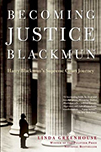 Risa Goluboff: "'Condign Justice Blackmun,' past Linda Greenhouse, gives a wonderful sense of the mysterious world of the Supreme Courtroom. And Bryan Stevenson'due south 'But Mercy' shows the immense impact a lawyer tin have on the world."
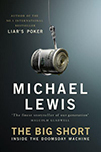 Edmund Kitch suggested reading "The Big Brusk: Inside the Doomsday Machine," by Michael Lewis, which details the build-up of the housing and credit bubble during the 2000s. Kitch's scholarly and teaching interests include agency, corporations, securities, antitrust, industrial and intellectual property, economic regulation, and legal and economic history.
David Due south. Law recommends Grant Gilmore's "The Death of Contract." He notes: "Information technology plays with big ideas that run through much of the first-year curriculum. It's succinct and well written. It focuses on the relationship between fields of constabulary (mainly contracts and torts), and in understanding the relationship between multiple fields at a conceptual level, i cannot help but besides acquire a conceptual understanding of the fields themselves. That's a lot of birds with 1 stone."
Peter Low thought that Herbert Packer's "The Limits of the Criminal Sanction," would be a good reading choice because it is an "accessible and provocative drove of ideas about criminal law, nearly of which will be encountered at some point in law school. Parts I and 3 are most relevant to the first year course in criminal law. Part II primarily relates to criminal procedure, a topic that comes later in the curriculum."
Jessica Lowe recommends "a expert, comprehensive book on the history of American law — maybe Lawrence Friedman's 'A History of American Police force' — and 'The Rise of the Conservative Legal Movement' by Steven Teles. Those will give them an insider'due south route map equally to why different judges (and professors!) wait at the law the mode they do."
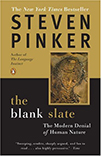 John Monahan suggested Steven Pinker, "The Bare Slate: The Modern Denial of Man Nature." "The book is an splendid and highly readable business relationship of how evolutionary thinking is transforming our understanding of human beliefs," he said. When Monahan arrived at Virginia in 1980, he became the second not-lawyer on the Law School faculty. He teaches courses on social science in law.
Dan Ortiz recommended Jonathan Harr'due south "A Civil Action," proverb that the book about a toxic tort example in Massachusetts "gives people a existent feel for in-the-trenches litigation, shows how the courtroom organization works, and raises some ethical issues." He too recommended an article, Alex Beam's "Greed on Trial," which appeared in the June 2004Atlantic(Vol. 293, No. v). "It describes the Massachusetts trial of a claim past some lawyers for their chaser's fees in the tobacco settlement," Ortiz said. "It raises interesting ethical issues and too questions like what does the 'public interest' mean." Ortiz teaches constitutional law, administrative law, electoral law, ceremonious process, and legal theory.
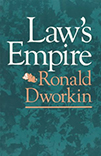 George Rutherglen thought commencement of "Constabulary's Empire" by Ronald Dworkin. "It's a piddling advanced," warned Rutherglen, "although very accessibly written. I would recommend information technology to students who accept a groundwork in philosophy or political theory." Rutherglen teaches admiralty, civil process, employment discrimination and professional person responsibleness.
Many professors think the all-time preparation for your first semester is to go plenty of remainder. 1 faculty member,John Setear, concurred with that view, simply had a slightly different have: "The students don't need to read ahead before they become hither. They need to pay attention when they do get here. Providing a semi-official reading list will just encourage the students mistakenly to think that law school is like college, and that what they need to practise in police school is to master large numbers of facts provided to them past others, rather than to call back carefully near modest numbers of facts provided by others and fifty-fifty to come up with hypothetical 'facts' of their ain."
Paul Stephan recommended "Super Strategies for Puzzles and Games" by Saul X. Levmore and Elizabeth Early Cook as a useful introduction to 1 kind of analytical thinking that lawyers and police force students employ all the time.
 Rip Verkerke takes the title for the most recommendations, having provided ii reading lists. "The offset is derived from my Ethical Values Seminar that focuses on works that claiming reigning orthodoxy in diverse fields," he said Those books include:
- Stephen Pinker, "The Blank Slate"
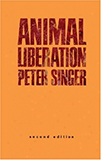
- Peter Vocalist, "Animal Liberation"
- Barbara Ehrenreich, "Nickel and Dimed: On (Not) Getting By in America"
- Pecker McDonough and Michael Braungart, "Cradle to Cradle: Remaking the Way we Brand Things"
- Matthew Scully, "Dominion: The Power of Man, the Suffering of Animals, and the Call to Mercy"
- Bjorn Lomborg, "The Skeptical Environmentalist: Measuring the Real State of the Earth"
- Patrick Michaels and Robert Balling, "The Satanic Gases: Immigration the Air almost Global Warming"
- Martha Fineman, "The Neutered Mother, the Sexual Family and Other Twentieth Century Tragedies"
Verkerke specializes in employment and labor law. He said those interested in that field also would observe it worthwhile to read one of the following books:
- Paul Weiler, "Governing the Workplace: The Time to come of Labor and Employment Law"
- James Atleson, "Values and Assumptions in American Labor Law"
Source: https://www.law.virginia.edu/admissions/how-soon-can-i-start-reading-suggestions-incoming-first-years
0 Response to "List of Books First Year Students at Yale Law School Read"
Postar um comentário