Best Way to Build External Double Wall on House
Skillful step-by-step instructions on building a wall, with diagrams, tips for framing with wall studs, how to attach drywall and paneling, and more than DIY assistance
An interior wall is typically congenital from ii-by-4 or 2-by-6 wall studs and framing, covered with panels of gypsum drywall that are nailed or screwed to the framing members.
How to Build a New Wall: Summary
- Locate the new wall.
- Adhere a top plate to the ceiling framing.
- Use a plumb bob to position a bottom ("sole") plate directly beneath the elevation plate, and boom information technology to the floor.
- Install wall studs betwixt the top and bottom plates on 16- or 24-inch centers.
- Nail or screw drywall to the studs and plates.
- Use cornerbead, drywall record and chemical compound to hide the joints and fasteners.

Many remodeling projects involve building or relocating 1 or more than interior walls. Building a nonbearing interior wall is relatively easy, requiring just bones carpentry skills and tools.
Depending on the nature of your existing flooring, walls, and ceiling, you may have to pare away some surface materials to provide for secure attachment at the top, bottom, and ends of the new wall. If the new wall won't butt into studs at the connecting wall or fall direct beneath a ceiling joist, you must install nailing blocks betwixt the framing pieces.
A typical interior wall has a skeleton of vertical 2-past-iv studs that stand betwixt horizontal 2-by-4 base and acme plates. (However, if a wall will comprise extensive plumbing, it should exist built from two-by-6 studs and plates.)
Scan Tools for This Project on Amazon
• Combination Squares
• Power Round Saws
• iv-Pes Levels
• Drywall Tools
• Framing Nailers
• Pancake Air Compressors
The framework is typically covered with gypsum wallboard or lath and plaster; in a bathroom, with h2o-resistant "green" wallboard and tile backerboard and tile.
Following are the steps for framing a wall. After you lot finish the framing, refer to the links above right for the techniques used for cutting and attaching drywall or paneling. If this looks like the work will be across your skills or if you don't accept the necessary tools, hire a framing contractor or carpenter to do the piece of work.
Building an Interior Wall: Step-past-Step
To begin, mark the center line of the new wall across the ceiling. And then measure and mark half the width of the new wall'south top plate in each management. Snap a chalk line between these marks. Plan one stud at each end and, if an end meets a wall, measure xv ane/iv inches to locate the inside edge of the first intermediate stud and so 16 inches to the same edge of each additional stud.
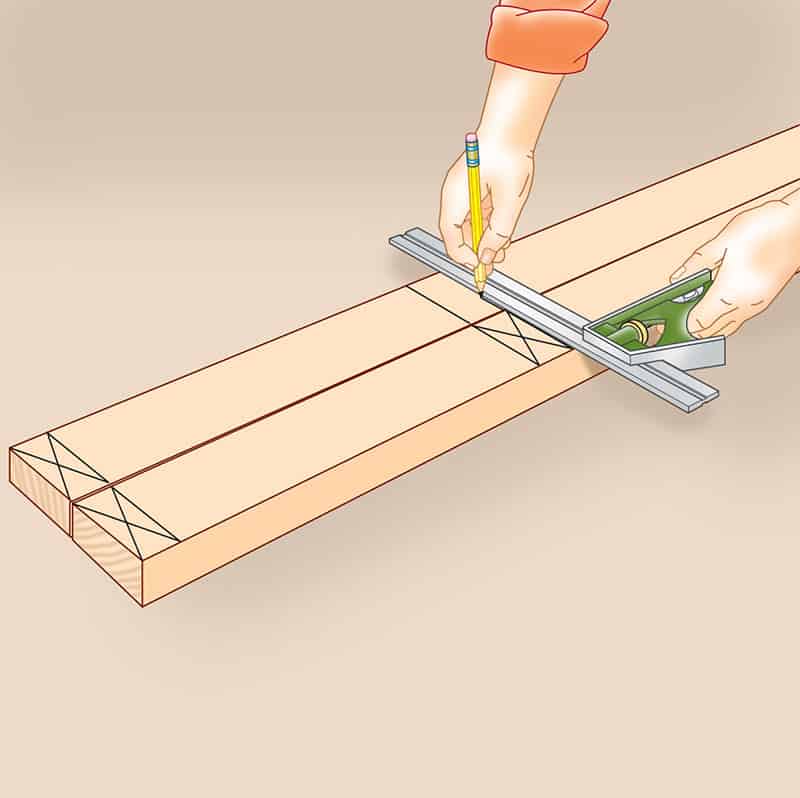
1 On the floor, lay the top and lesser plates side by side. Carefully measure where each wall stud will go and mark perpendicular lines beyond the plates, using a combination foursquare and then the studs will align perfectly.
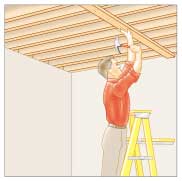
two Locate the joists in the ceiling (here we've shown the drywall on the ceiling removed for clarity's sake). Hold the acme plate in position along the guideline marked on the ceiling and boom through the ceiling material and into each joist with 2 3 1/ii-inch nails. (If the new wall runs parallel to the joists, fasten the plate to nailing blocks installed between the joists.)
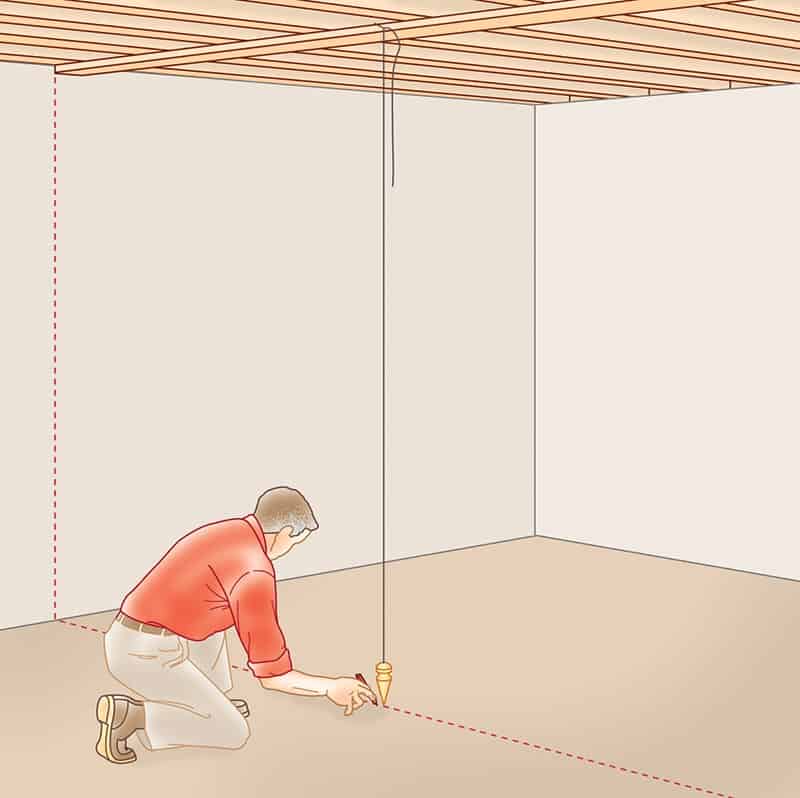
3 Hang a plumb bob from each end of the top plate on the ceiling to just above the flooring and then marking the floor to plant the bottom plate's location straight below information technology. Snap a chalk line along the flooring between the marks as a guide for the bottom plate's edge. Nail the plate with 3-inch nails staggered and spaced every 16 inches.
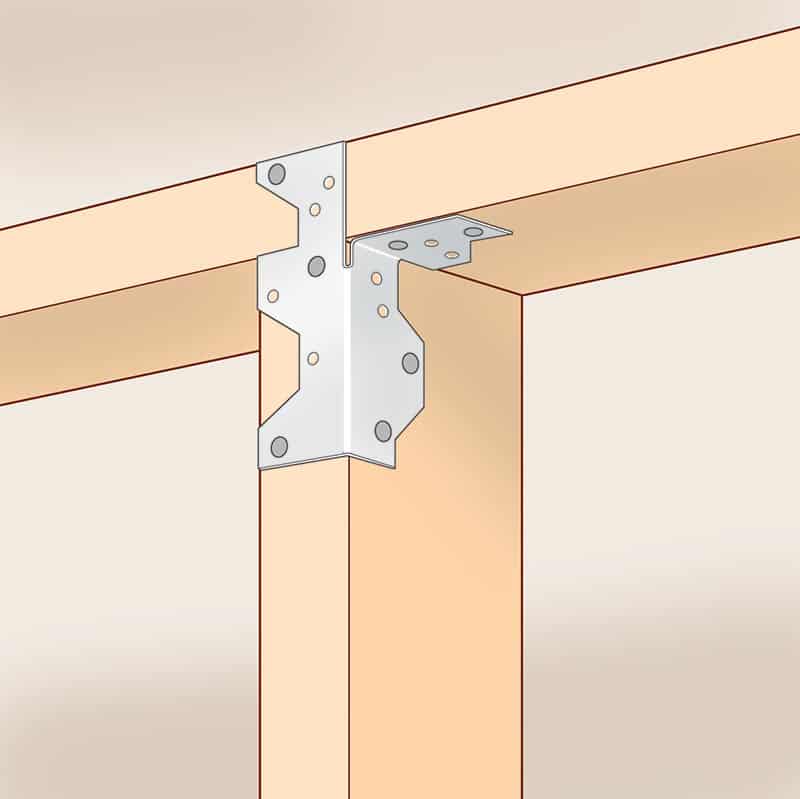
4 Use stud-framing clips to install each wall stud. Elevator the stud into position and line it upwardly on its marking, flush with the edges of the top and bottom plates. Check plumb using a carpenter's level, and smash the stud into place. (Alternatively, you can toenail each stud to both the top and bottom plate with two ane/ii-inch nails, but this is harder to do if you're inexperienced.)
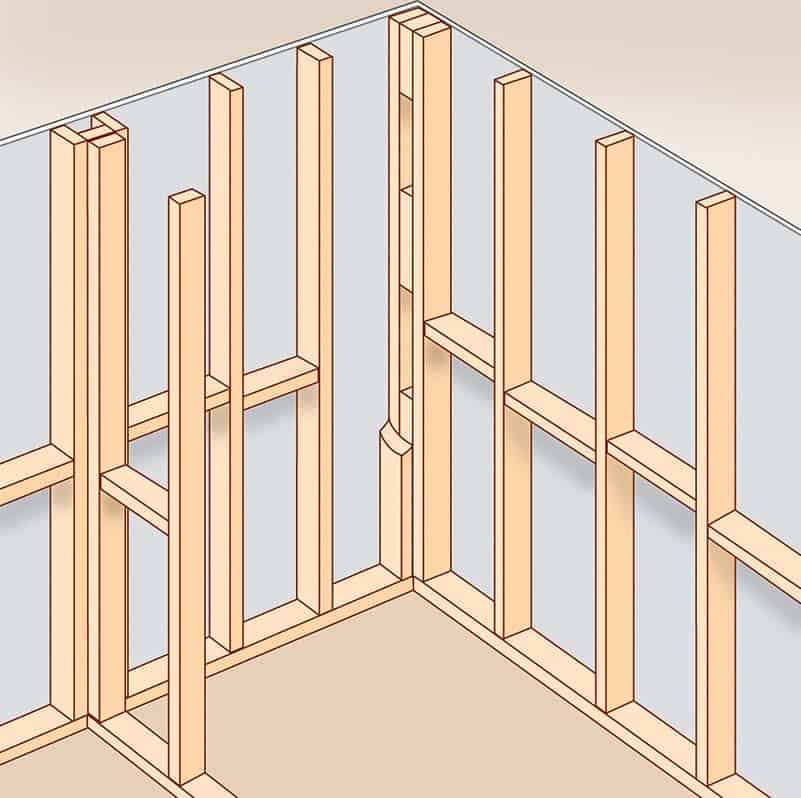
5 Form the connections and corners. Where i wall intersects another, double upwardly studs to receive the intersecting wall. If the wall will plough a corner, frame it with ii total-length studs that have blocks sandwiched in between.
Next Meet:
•How to Cut Drywall
• How to Hang Drywall
• Soundproofing Walls & Ceilings
• How to Panel a Wall

Source: https://www.hometips.com/diy-how-to/build-a-wall.html
0 Response to "Best Way to Build External Double Wall on House"
Postar um comentário